When Jess Woodroffe talks about football, she is quick to note that it is more than just the game. “I love what it does, how it brings people together,” she says. “It provides a space for people to feel something and belong.”
Woodroffe is the first female chairperson of Launceston City Football Club, one of the largest community sports organisations in northern Tasmania. By her count, the club drew players from 73 different suburbs, six local government areas and three federal electorates last season, stretching from Devonport and Latrobe in the west to Bridport and Lilydale in the north-east. Around 40 to 45 per cent of members live in the Meander Valley and make the trip to Prospect Vale to play.
Letter to the Editor
The numbers tell a story of growth. In 2025, the club recorded close to 630 junior players, from under-fives through to youth level, alongside roughly 150 senior players. With volunteers, coaches and administrators included, active membership sits at around 800. The junior program alone fielded close to 60 teams last season, all organised by volunteers.
The club has also produced talent at the highest level, with goalkeeper Amelie Millar recently signed by A-League Women’s side Adelaide United.
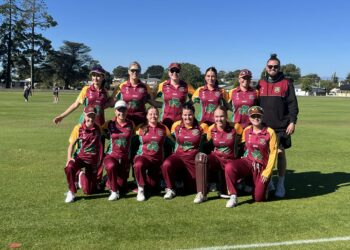
This season brings a milestone the club has been working toward for nearly a decade. The women’s team is returning to the Women’s Super League competition for the first time in close to ten years. “Our club is growing and the number of volunteers is growing,” Woodroffe says.
That growth has been matched by a significant transformation of the club’s physical footprint. For most of its history, the site at Prospect Vale amounted to little more than a driveway and a shed. The grounds are owned and maintained by Meander Valley Council, while the surrounding land and buildings belong to the Australian Italian Club Launceston. Things started to change just before COVID, when the club secured Commonwealth and state government funding after what Woodroffe describes as hard work by the board. When building costs surged during the pandemic, the scope was scaled back, but the club pressed ahead rather than wait for circumstances to improve.
The North Coast Post: BSB 633 000 · Account number: 2366 8 9535
The result was the Peter Mies Pavilion, named after the club’s previous patron who passed away shortly before its completion. It houses two full-size change rooms, a referees room and a training room. “To see those kinds of state-of-the-art facilities is pretty amazing,” Woodroffe says.
A second project is now nearing completion. The Play Our Way building was funded through a national competitive grants pool of $200 million, released to sports that support women and girls. Female football in Tasmania has a 40-year history, the old change rooms dated to 1979 and were no longer fit for purpose, and the club wanted to make a case for returning to the top women’s competition.
“That was probably the highlight not just of my time in this club, but probably my career,” Woodroffe says.
The club receives no funding from Football Tasmania and pays fees to participate in the league, which means it is almost entirely self-sustaining. Sponsorship has become central to its financial model. Last year the club reached 60 sponsors, ranging from individual player sponsors to ground sign holders to businesses providing food, beverages and other in-kind support. “The generosity and the interest of our community is without a doubt incredible,” Woodroffe says.
The club’s stated vision is to become the club of choice for northern Tasmania, a goal Woodroffe says is defined by inclusion rather than geography. People are welcome regardless of where they live or go to school.
For anyone wanting to get involved contact the club through its website or social media.