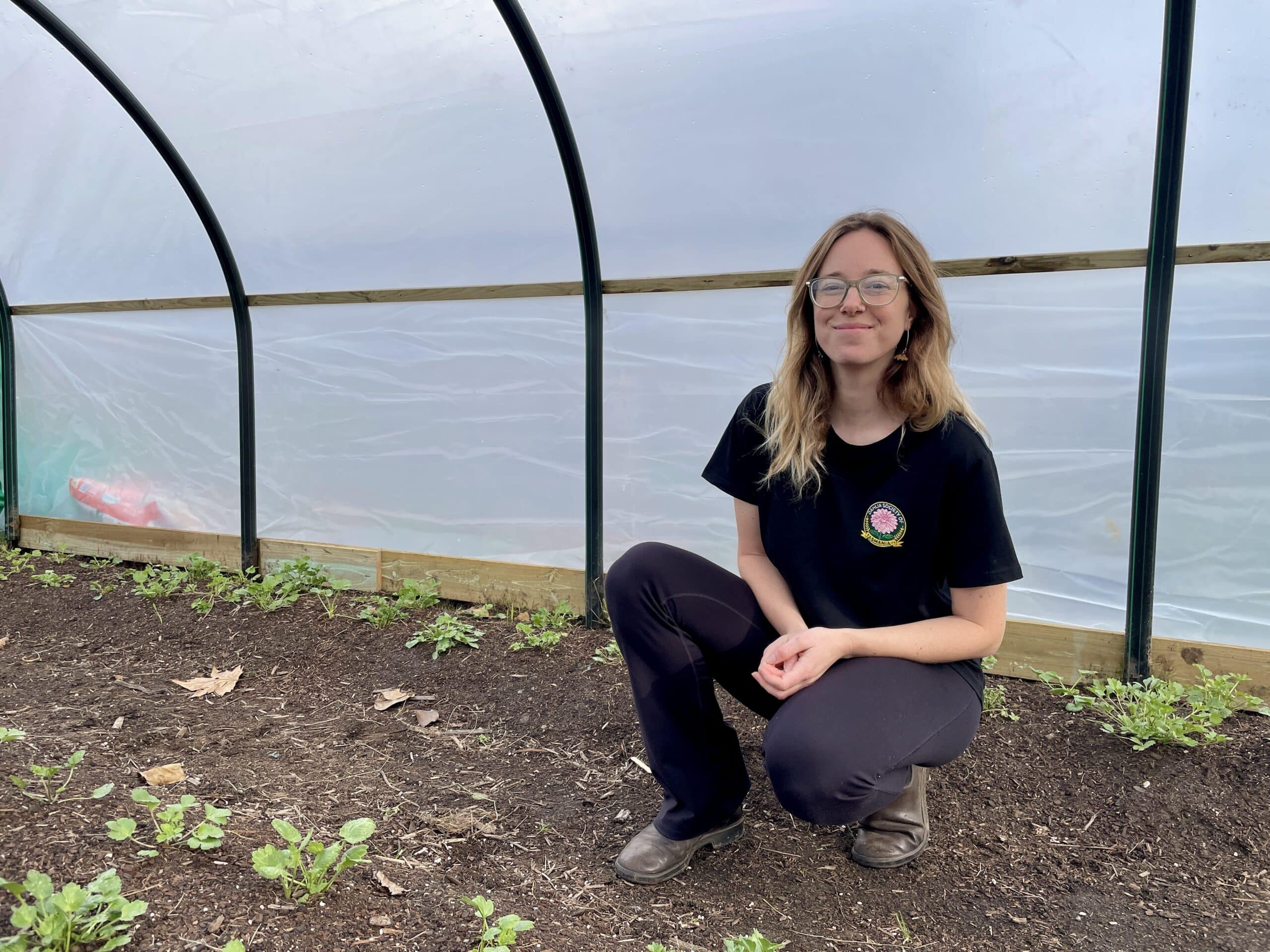
Chevi Robnik never set out to run a business. She started growing flowers in her backyard purely for the joy of it, tending a small patch behind her home in Mole Creek. Two years on, that hobby has become Poetry in Petals, a micro flower farm also known locally as PiP, and Robnik is preparing for her third growing season.
“They make people happy,” Robnik says of flowers, sitting among rows of ranunculus on her property. “They make me happy growing them, and seeing people buying them and making them happy. I guess it’s quite simple.”
Letter to the Editor
The name came almost by accident. After realising her casual growing habit needed a proper identity, Robnik settled on Poetry in Petals in a moment she describes as typically impulsive. What began as a bit of fun quickly turned into a genuine pursuit, though she still considers herself a novice heading into this new season.
At the moment, Robnik sells mostly through word of mouth and social media, offering bouquets to locals who come to her or arranging deliveries nearby. But she has bigger plans. A roadside stall on Caveside Road is on the horizon for spring, and she hopes to eventually supply bouquets to shops and other businesses locally.
The North Coast Post: BSB 633 000 · Account number: 2366 8 9535
Dahlias are her specialty, and this season she is branching into tuber sales for the first time, with a shed full of tubers waiting for warmer weather. Longer term, Robnik wants to shift much of her focus toward Tasmanian and Australian native flowers, which she says suit the local climate far better than traditional summer blooms.
“More hardier and longer lasting,” she says of the natives, noting that strawflowers are particular favourites. Their appeal goes beyond the vase too, since they hold their colour when dried, making them useful for more than just fresh bouquets. The trade off is patience. Robnik expects it could be a couple of years before her native plantings are ready to harvest efficiently, a stretch she views as a long term investment.
Weather has proven the biggest obstacle so far. Mole Creek’s conditions differ sharply from nearby Deloraine or Launceston, and strong winds battered her flowers in the early days before she installed a polytunnel. One particularly harsh memory stands out, a freak frost in the middle of February last year that wiped out a bed of dahlias just as market week approached.
“All flowers were just gone,” Robnik recalls. The polytunnel now offers some protection, though she says weather remains one of her toughest challenges.
Building up the soil has been another slow process. Robnik brought in compost and additional soil to get her beds established quickly, with plans to gradually work more of the property’s original earth back into the mix over time.
Running the farm alongside raising a five year old, who is also about to start homeschooling, adds another layer of juggling. Robnik’s husband Zane is a carpenter whose work takes him across the state, so he helps out when he’s home. She says she fits in what she can during small pockets of time, and her daughter is increasingly old enough to help out in the garden.
Despite the varied challenges, she believes the local response has been encouraging. “I have a lot of local support, which has been really nice,” Robnik says, adding that customers seem genuinely invested in watching the farm grow.
