In the foothills of the Western Tiers, at a bend in Pool Road, Caveside, two industrious ex-Queenslanders work at growing their business. It is here that James and Melissa van der Boom have built Lucky Platypus.
“We decided in 2018 that we’d move down here,” Melissa says. “It took seven years. Every year we’d come down, we’d look and see if we could cope with the cold.” After countless inspections and rising property prices, they finally found their place. “I went up the back [of the property], turned around and said ‘you can’t change that view!’”
Letter to the Editor
Since making the move from Cairns, their days have revolved around two things: creating and cultivating. Lucky Platypus began with Melissa’s handmade crocheted garments, using yarn she spins herself. “The higher end is your hand-spun yarns and for the cheaper end it’s store-bought yarn,” she explains. “It could be acrylic, wool, or soy blend. Whatever I can get at a good price.”
James, originally drawn in to help make buttons, now handles the timber side of the business. Using a laser engraver, he creates garden markers, doorstops and accessories that complement Melissa’s garments. “Everything is handmade,” he says. “It’s one of our selling features at markets.” But even with signs declaring their products are handmade, they are often asked, “Did you make this?”
The North Coast Post: BSB 633 000 · Account number: 2366 8 9535
While their craftwork thrives at local markets and through online orders, it is the market garden that is the bigger dream. “Our whole aim of moving down here and having property was to have a market garden,” Melissa says. The journey has not been easy. Frosts, wind and fluctuating temperatures have taken their toll. “Even though we’ve grown two to three times the size of last year, we’ve got nowhere near as much productivity,” she says.
Still, the garden now includes rows of beetroot, lettuce, radish, beans, peas and over 120 strawberry plants. “People like fresh produce,” says James. “And the fact that we can say we’ve homegrown it helps. People are very supportive that way.”
Certification remains a sore point. A proposed new law could require small producers to pay the same regulatory fees as large agribusinesses. “We don’t make enough money here to warrant getting certification,” James says. “It may cost up to a thousand dollars a year and they’re not distinguishing between the teeny tiny people like us and the big corporations.”
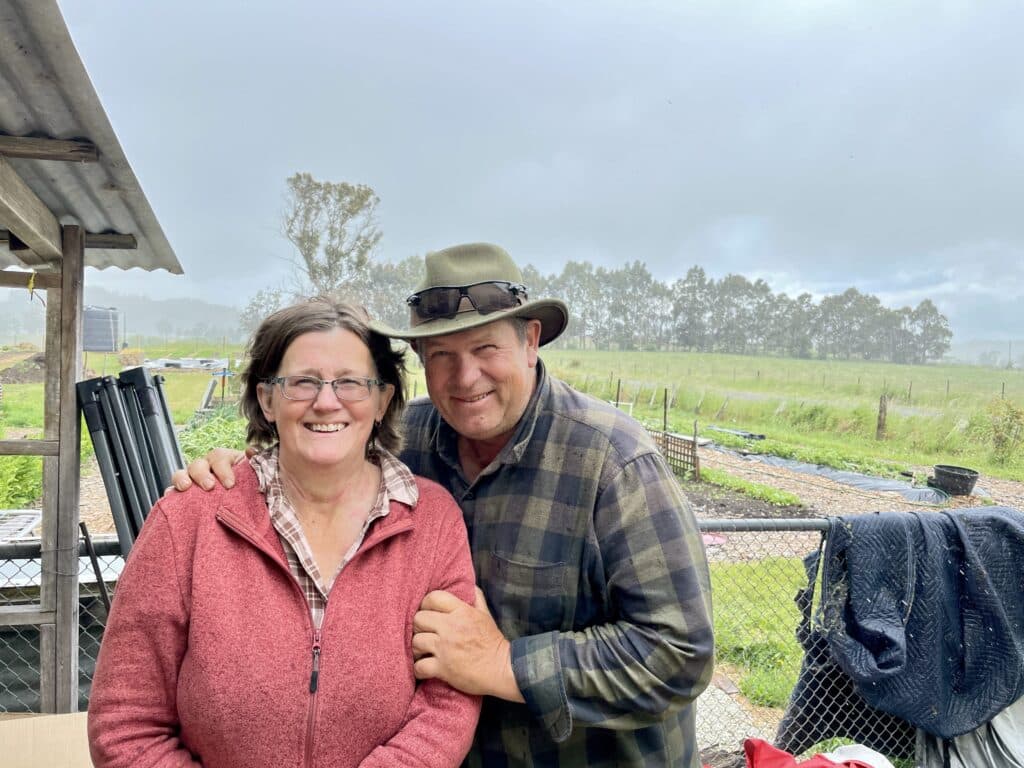
Despite the challenges, community response has been overwhelmingly positive. “Last year the roadside store did really well,” says Melissa. “We’re in the middle of nowhere, but it’s amazing how many tourists are directed around here.” Locals are also eager, often asking when the stall will return. “A lot of them came back to buy more because they say, ‘oh, we got some last week, and we absolutely loved it.’”
Lucky Platypus also has a global reach, thanks to Melissa’s crochet tutorials on YouTube. “Most of my people, believe it or not, are from America,” she says. “They actually find it easy and simple to follow. I’m a trained trainer and assessor, so I’m very particular with the way I do it.”
Looking ahead, they plan to expand slowly. “Not get too big, but just big enough,” James says. They hope to supply local pubs or cafes, and are exploring out-of-season crops, greenhouse options and have earmarked three RV spots for future visitors, pending council approval.
“I feel like we’re home when we’re here,” says James. And for Melissa, the moment they arrived was unforgettable. “It was the most perfect, pristine, clear, crystal, not-a-breath-of-air day,” she says. “I just burst into tears of happiness. It was like Tasmania was saying ‘Welcome. You’ve made it’.”


I bought a beautifully soft, warm woollen jumper from Lucky Platypus at the Deloraine Market. It’s remarkably light and comfortable. The price was excellent for a hand-made item constructed with premium yarn. It’s extra special to know that it’s hand-spun. My mum used to hand-spin yarn from her goats and sheep at Meander, then weave or knit with it. It’s lovely to have enterprising and talented locals around who still do this.
I wish them great success with the market garden business. I hope the regulatory legislation is nuanced enough to distinguish between large commercial operators with big, established supply lines and small-scale cultivators supplying fresh produce to the local community/small business.